GOTS - A Standard for Certified Organic Textiles
The GOTS label is your assurance that a textile product has been certified to GOTS's requirements for certified organic fibre content, textile processing, environmental management, social criteria, traceability and independent third-party certification. You can find the GOTS label on all kinds of textile products – from aprons to wool sweaters.
GOTS-certified products are:
Made with certified organic fibres
GOTS label grades identify the certified organic fibre content of a textile product. Organic fibres used in GOTS-certified products come from certified organic production systems and are produced in accordance with the applicable organic production requirements, including restrictions on GMOs and synthetic agricultural inputs. Organic fibres include plant-based fibres such as cotton, hemp and linen, as well as animal-based fibres such as wool, silk and cashmere.


made under social criteria
GOTS social criteria, based on the key norms of the International Labour Organisation (ILO), United Nations Guiding Principles on Business and Human Rights (UNGPs) and Organization for Economic Cooperation and Development (OECD), must be met by all processors, manufacturers and traders.

made with environmental criteria
GOTS sets environmental requirements for certified textile processing. Chemical inputs, including dyes and auxiliaries, must meet GOTS criteria. Certified wet-processing facilities must meet wastewater requirements, and certified facilities are subject to requirements covering environmental management, energy use and emissions. Accessories and additional materials must meet the applicable GOTS requirements.

Traceable along the supply chain
GOTS uses chain-of-custody and transaction documentation to link certified organic fibre inputs with certified processing, manufacturing and trading stages. GOTS processing certification starts after fibre production. For a finished product to carry the GOTS label, the applicable companies in the certified processing chain must hold valid GOTS certification.

Third-party certified
Processors, manufacturers and traders within the GOTS certification scope are inspected and certified by independent GOTS-approved Certification Bodies. This provides third-party verification against the applicable GOTS requirements.

Made only in facilities which adhere to the strict GOTS criteria
The GOTS certification system begins with the cultivation of organic fibers and extends to cover all subsequent stages of processing, manufacturing, and trade in organic textiles. To carry the GOTS label, every processor, manufacturer and trader in the certified supply chain must hold a valid GOTS certification and comply with the GOTS environmental and social criteria.

made under strict chemical input criteria
GOTS sets requirements for chemical inputs used in certified textile processing. The Standard prohibits or restricts specified substances, including PFAS, certain flame retardants and dyes that do not meet its requirements, and includes limits for specified chemical residues in certified textile products.

Look beyond
green claims.
Look for GOTS.
Meet the GOTS team
GOTS is overseen by an independent non-profit organisation. Our team consists of 47 specialists from 15 countries, collectively speaking 25 languages. From human-rights lawyers to organic-production specialists, textile engineers, quality-assurance experts and monitoring and evaluation specialists, our team develops and supports GOTS requirements covering environmental, social and certification criteria for textiles.


GOTS in Numbers
GOTS currently reports 17,800 certified facilities in 95 countries, audited by 27 independent Certification Bodies.
17,800 certified facilities
in 95 countries
audited by 27 independent Certification Bodies
Financial Transparency
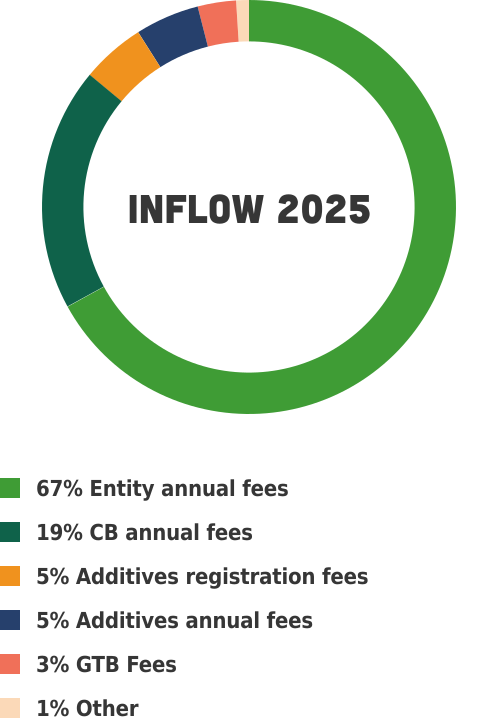
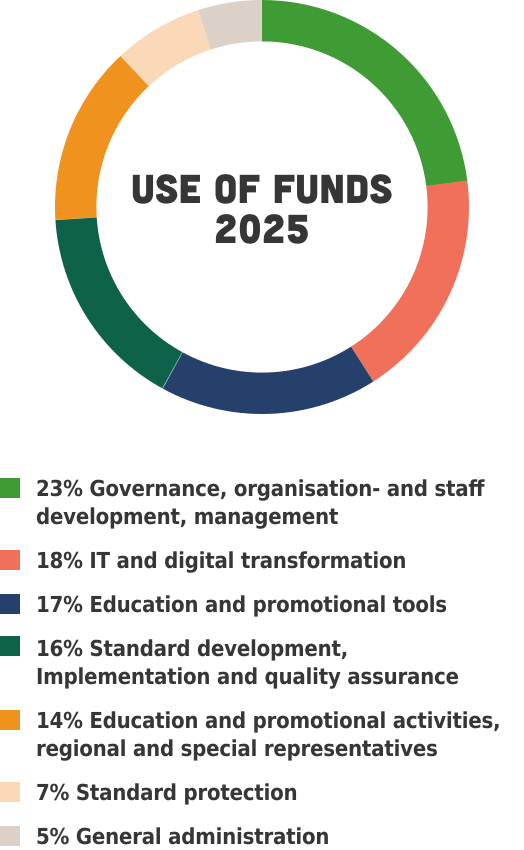
As an independent, non-profit organisation, GOTS sustains itself mainly through annual fees of €180 per certified facility. This fee remains uniform for all certified facilities worldwide, regardless of their size. In 2025, GOTS received an inflow of €5,059,762.00 and spent €5,250,095.00. Here's how we used it: