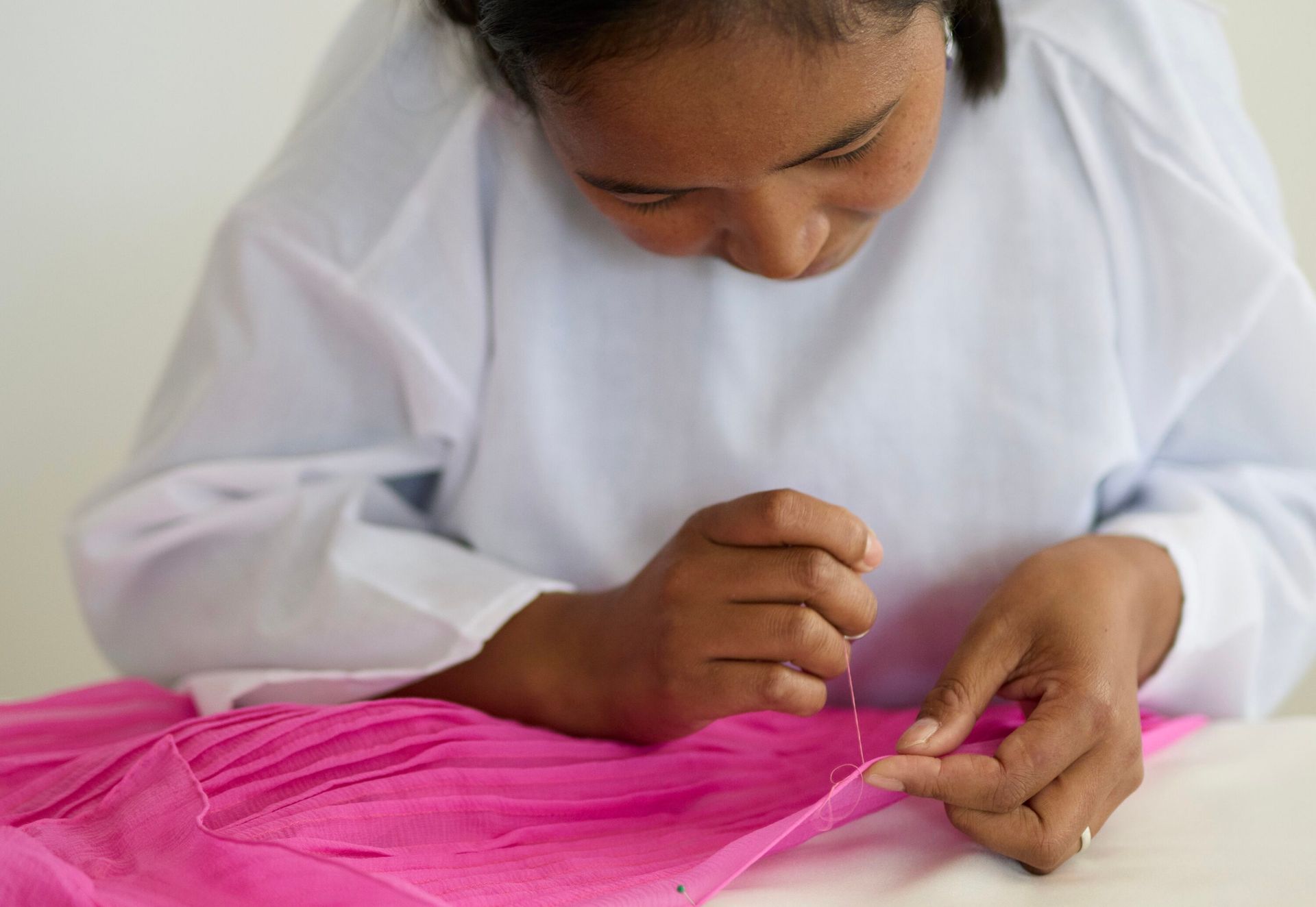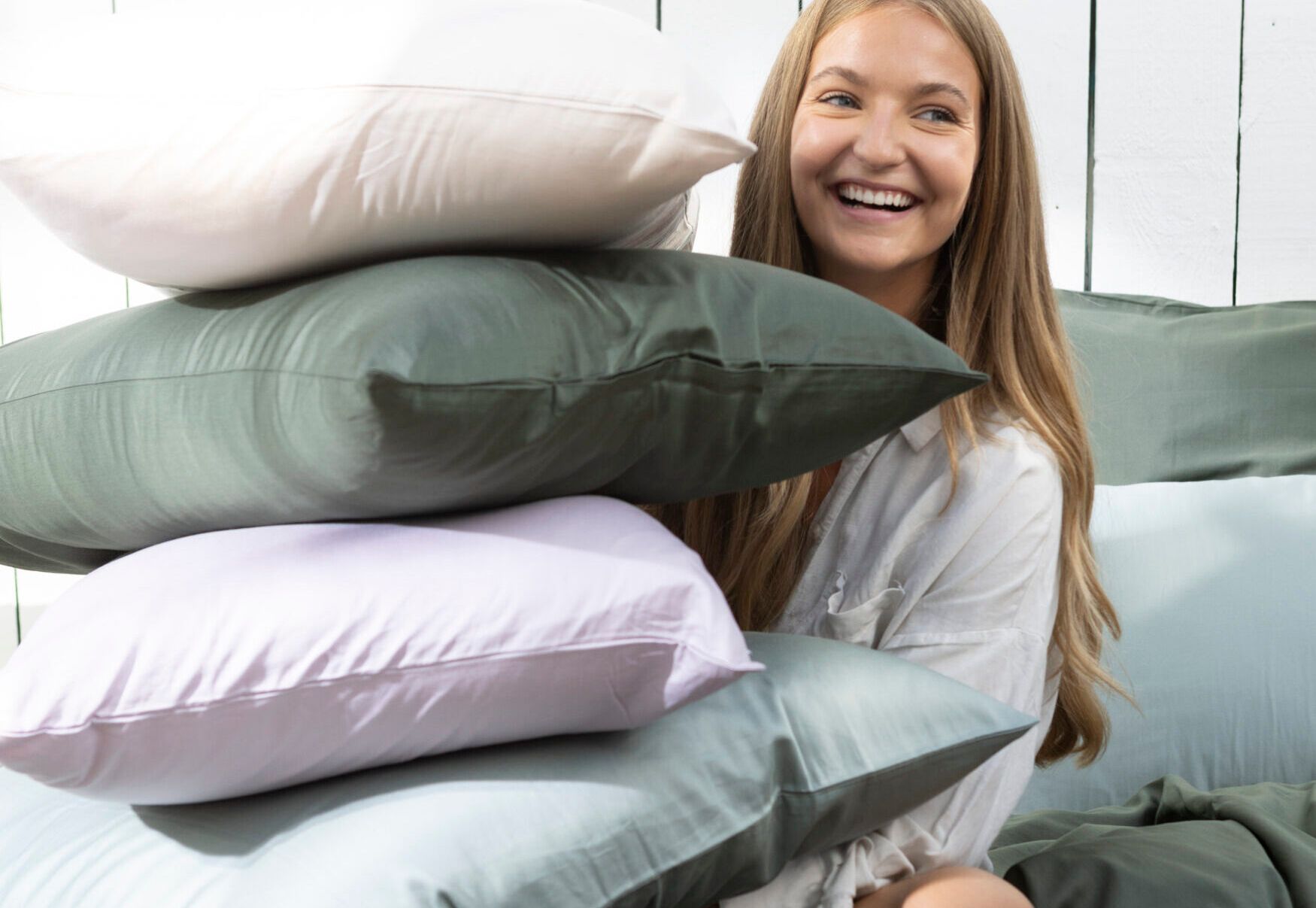
Sleep is not something that happens only in the body. The way we rest and give our body energy is shaped by space, light, texture, colour, temperature and by the subtle signals our environment sends to the nervous system long before we close our eyes. This understanding lies at the heart of Kalani Home, a Belgian home textile brand founded in 2016 in Genval (Belgium), whose work sits right where design, well-being and material consciousness. Specialising in bed linen, bath and table linen, as well as light bedding such as duvets and pillows, Kalani approaches the concept of “home” not as a purely aesthetic space, but as a living environment that can actively support rest, recovery and emotional balance with textiles.
From the beginning, Kalani has worked with a small, focused team and a deliberately controlled production scale, designing textiles with longevity in mind. Its collections are understated and timeless, allowing the body and the space to take centre stage.
GOTS has formed part of Kalani’s approach since the brand’s early years. Founder Bruno Van Steenberghe says that, after researching different approaches to textile production, the company decided to work with textiles made with certified organic fibres and processed and manufactured in accordance with GOTS requirements. GOTS applies requirements to the processing and manufacturing of textiles made with certified organic fibres, including defined environmental and social requirements.
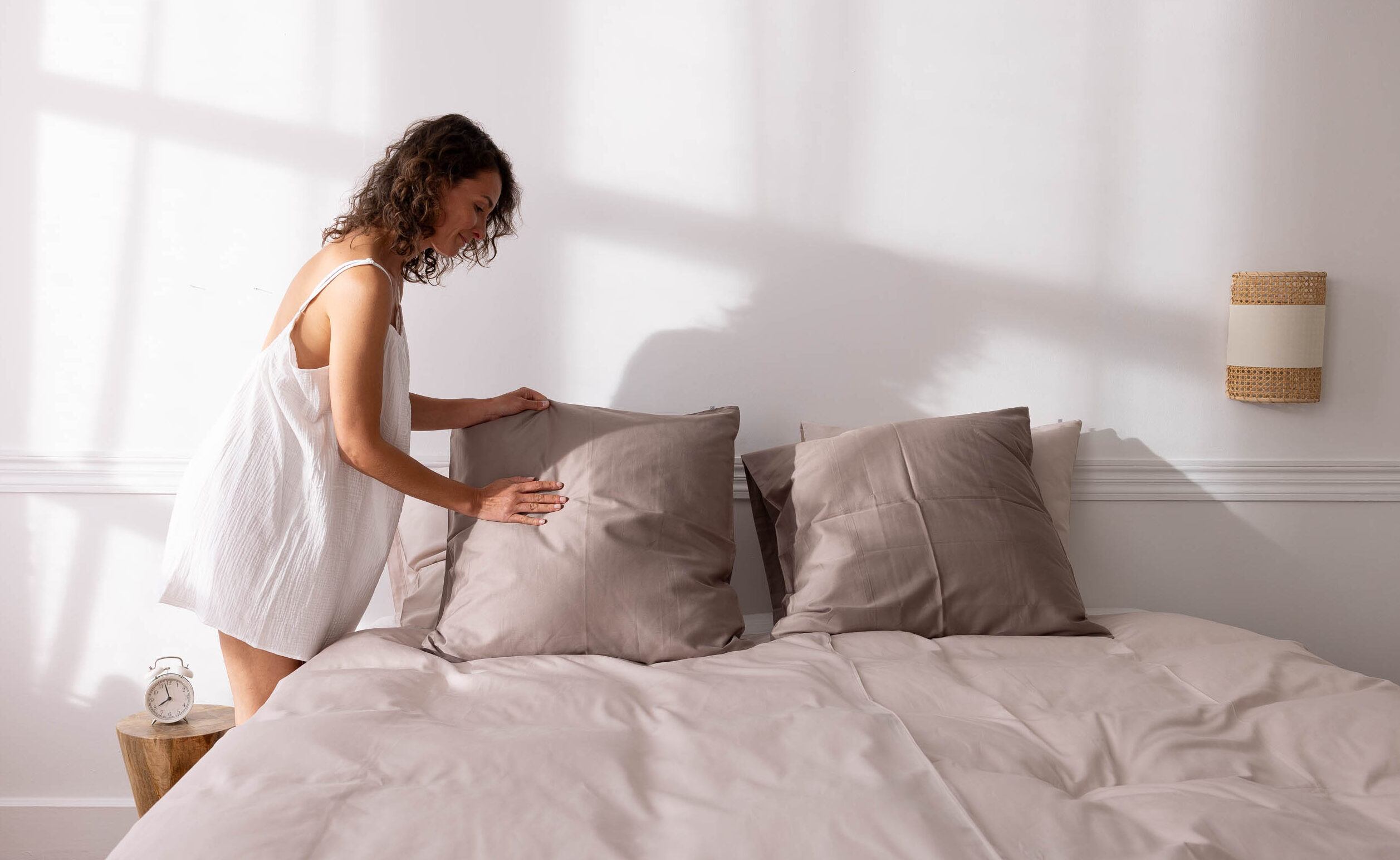
Neuro-architecture explores the relationship between people and the spaces around them, including how elements such as layout, bed placement, colours, textures and materials contribute to the experience of a room. A bedroom can be visually expressive or deliberately simple, but in either case its design can influence how we experience the space.
Within this approach, home textiles are an important part of bedroom design. Sheets, pillowcases and duvet covers are not simply decorative layers: they are in direct contact with the body for several hours each night. Their texture, weight, warmth and feel can therefore play an important role in personal comfort and in the overall sensory character of the bedroom.
Material choice is part of that experience. Cotton and linen, for example, have distinctive material properties and textures that can be considered alongside factors such as colour, weight, weave and the temperature of the room. Rather than treating bedding simply as decoration, a neuro-architectural approach considers it as one element within the wider design of the sleeping environment.
Kalani has explored these ideas through collaborations with sleep and home-design experts, examining how choices in home textiles interact with spatial design. More recently, the brand has been working with neuro-architecture and feng shui expert Alexandra Bautista, founder of Architecture Vivante®, whose approach brings together neuroscience, environmental psychology and spatial planning.
In this approach, the bedroom is considered a space for rest and recovery, with attention given to how its different elements work together. Material, texture, colour and spatial arrangement can all form part of creating a bedroom that feels comfortable and restful to the person using it.
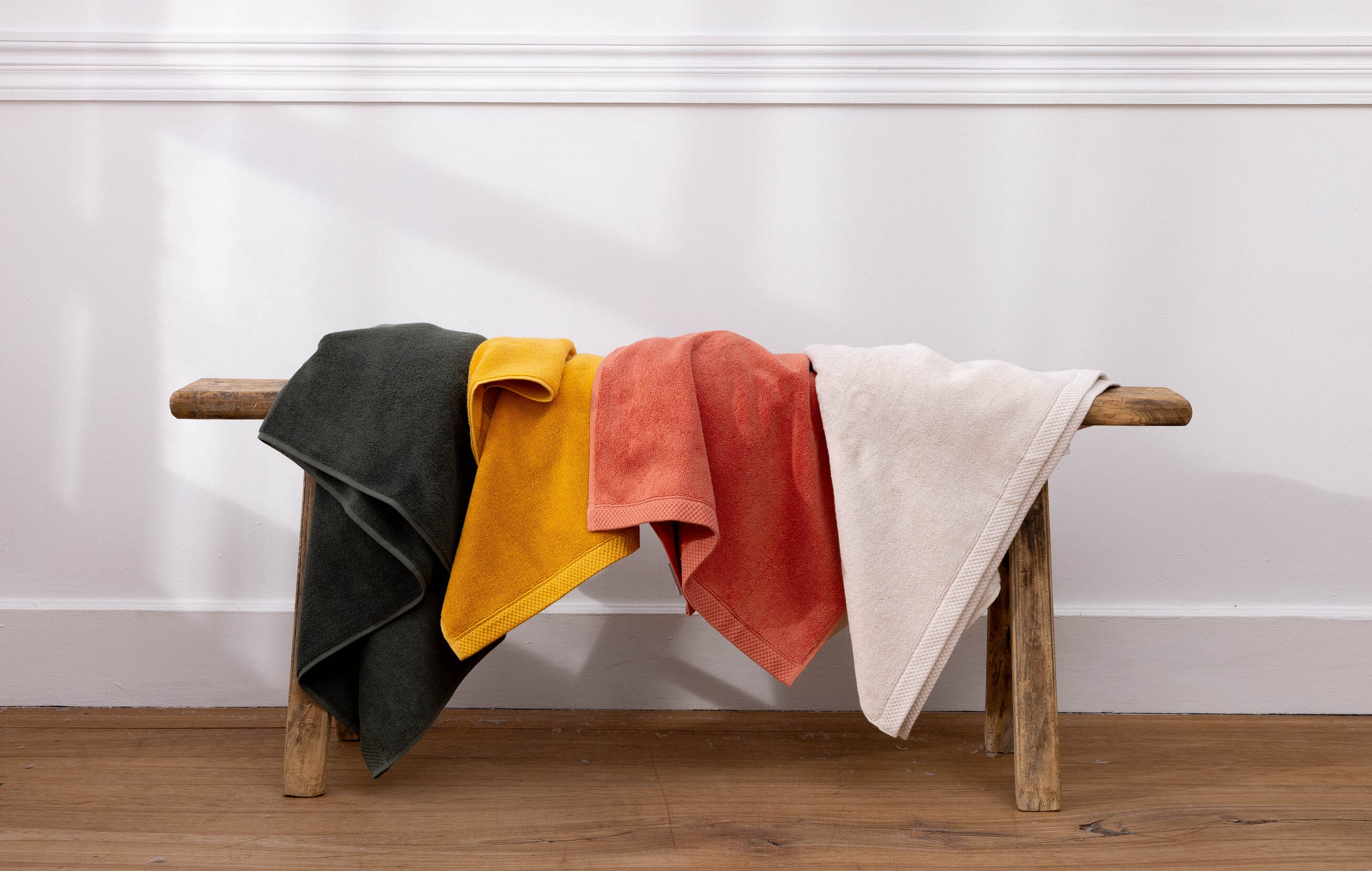
Colour is another important part of how we experience a bedroom. Bedding is often chosen according to personal taste or changing trends, but colour can also contribute to the overall atmosphere of a space. Some people find soft blues and muted tones restful, while others feel more comfortable surrounded by warmer or deeper colours. Because bedding occupies such a prominent place in the bedroom, its colour and pattern can have a strong visual presence.
Neuro-architecture does not need to translate this into a universal formula. There is no single “correct” colour or texture for everyone. Personal history, associations and individual preferences can all affect how we experience a space. A colour one person finds soothing may be unappealing to another.
This makes observation a useful part of bedroom design. Notice how different colours, fabrics and textures feel to you when you enter the room or get into bed. Rather than following a fixed formula, these preferences can help shape a sleeping environment that feels comfortable and personal.
Bedding can therefore become part of a personal ritual rather than simply a static object. Changing the sheets is a practical task, but it can also refresh the colour, texture and overall atmosphere of the room in which we rest.
Kalani Home approaches its textile choices with this relationship between material and space in mind. Its bedding uses natural fibres and places emphasis on tactile qualities, colour and materials intended for regular, everyday use. For its GOTS-certified products, the relevant certification provides a defined framework for textile processing and manufacturing, including requirements relating to chemical inputs and residue limits.

In a world full of screens, stimulation and busy routines, neuro-architecture invites us to pay closer attention to the spaces in which we rest. The home, and especially the bedroom, can be approached as a place where colour, texture, materials and layout come together to create a particular atmosphere. Through thoughtful design and greater awareness of how we personally experience our surroundings, the bedroom can become a space that feels comfortable, restorative and distinctly our own.
Sometimes, creating a bedroom that feels right is not about adding more, but about paying closer attention to what we choose to surround ourselves with when it is time to rest.